Collocated with SIGMOD 2026

Q-Data 2026

The third workshop on Quantum Computing and Quantum-Inspired Technology for Data-Intensive Systems and Applications.

Motivation

Whereas quantum computing started out as a purely theoretical concept, the last few years have seen a "Cambrian explosion" of first-generation commercial quantum hardware culminating from decades of foundational research. Players, including the likes of Google, IBM, and Intel, as well as startup companies like IQM, D-Wave, IonQ, and Rigetti, are now producing hardware devices that implement quantum computing using various technologies. At the same time, the recent advances in quantum computing have inspired a new generation of classical hardware accelerators, offered commercially by providers such as Fujitsu, Toshiba, and 1Qubit, that mirror the interfaces and take inspiration from internal processes of quantum computers. These accelerators, including digital annealers, as well as GPU- and FPGA-based simulators of quantum computation, obtain approximate solutions for extremely large, combinatorial optimization problems quickly.

Using quantum computing and related technologies has become convenient and possible with standard IT interfaces. Several software frameworks have recently appeared that make solving a diverse range of problems using quantum computers easier. At the same time, multiple cloud providers nowadays offer quantum computing as a service, making the technology accessible to broad shares of the population. Taken together, these developments have recently spawned a flurry of research in various communities, ranging from operations research to machine learning, and aimed at analyzing the transformative potential of quantum computing for specific use cases.

The primary objective of the Q-Data workshop is to explore how quantum computing and related technologies can enhance data processing, data management, data analysis systems, and techniques. It also focuses on hybrid approaches that integrate both quantum and classical computing methodologies to enhance such data systems and techniques. This workshop will spur new research efforts in this emerging field and pave the way for building next-generation data-intensive systems with quantum computing support.

Program Schedule

Workshop day: Sunday, May 31, 2026. All times are local to the SIGMOD venue.

Time Program
8:30 – 10:30 AM Session 1
8:30 – 9:30 AM Keynote Quantum Computing at Fujitsu: From Hardware to Enterprise Applications Krishnakumar Sabapathy
9:30 – 9:50 AM Quantum Index Advisors: Beyond Configuration Selection? Manish Kesarwani and Jayant Haritsa
9:50 – 10:20 AM QuSim-Join: Provably Optimal Quadratic Speedup in Set Similarity Joins via Quantum Amplitude Estimation. Prateek P. Kulkarni and Aakarsh Alam
10:20 – 10:30 AM Scalable Hybrid Quantum-Classical Optimization for the Traveling Salesman Problem. Ziyue Wang, Zhiwei Ye, Gongsheng Yuan, Mengying Zhu, Jiaye Li, Guanjie Cheng, and Ling Qian
10:30 – 11:00 AM Coffee Break
11:00 AM – 12:30 PM Session 2
11:00 AM – Noon Keynote Quantum Computing for Data Management – Which Problem is Worthwhile Solving? Kurt Stockinger
Noon – 12:20 PM Leveraging Quantum Annealing for Materialized View Selection. Immanuel Trummer
12:20 – 12:30 PM Quantum-Optimized Spatial Permutations: Minimizing Submatrix Rank for Block-Low-Rank Space-Filling Curves. Amr Magdy, Yunhan Chang, and Sameh Abdulah
12:30 – 1:30 PM Lunch
1:30 – 3:10 PM Session 3
1:30 – 1:40 PM Quantum Annealing for Multiobjective Query Optimization. Immanuel Trummer
1:40 – 2:00 PM Quantum Hypergraph Partitioning. Yiran Li, Batuhan Yilmaz, Michael Silver, Zachary Vernec, and Hans-Arno Jacobsen
2:00 – 2:30 PM A Toolbox to Understand the Physics of Quantum Data Management. Wolfgang Mauerer and Manuel Schönberger
2:30 – 2:40 PM Connecting Probabilistic Databases to Quantum Computing and Tensor Networks via Graphical Models. Valter Uotila
2:40 – 3:10 PM Opportunities and Challenges for Data Quality in the Era of Quantum Computing. Sven Groppe, Valter Uotila, and Jinghua Groppe
3:10 – 3:30 PM Coffee Break
3:30 – 5:00 PM Session 4
3:30 – 4:30 PM Keynote Quantum Speed Limit and Quantum Computing Arun K. Pati
4:30 – 5:00 PM Final Discussion & Conclusion

Keynotes

Krishnakumar Sabapathy

Quantum Computing at Fujitsu: From Hardware to Enterprise Applications

Krishnakumar Sabapathy, Head of Research in Quantum, Fujitsu, India

Keynote 1 · 8:30 – 9:30 AM

Abstract

I will give a brief overview about the quantum computing activities at Fujitsu that covers aspects of the hardware development, software/platform, and applications. Taken together, it gives an overview of where the field is heading along with guidance to understand timelines to quantum utility in some practical applications.

Biography

Krishnakumar Sabapathy is a quantum information scientist with over a decade of post-PhD research experience across academia and industry in India, Europe, and Canada. He specializes in building practical R&D solutions across the quantum technology stack, spanning quantum algorithms, applications, and software. He is currently focused on enabling enterprise and research users to harness quantum hardware effectively. He has also contributed to areas like photonic quantum computing, fault tolerant architectures, and quantum communication.

Kurt Stockinger

Quantum Computing for Data Management – Which Problem is Worthwhile Solving?

Kurt Stockinger, Zurich University of Applied Sciences, Switzerland

Keynote 2 · 11:00 AM – Noon

Abstract

Quantum computing is widely seen as a potential game changer for computationally hard problems, and data management—particularly query optimization—has emerged as a prominent candidate. However, demonstrating quantum advantage is not easy since current approaches typically cover small problems and are often only evaluated on quantum simulators. When executed on real quantum devices, these quantum benefits are not so clear anymore and sometimes completely vanish.

In this talk we start with an overview of current trends in quantum computing for database systems. Next, we highlight pitfalls of classical machine learning for query optimization. Based on these findings, we provide lessons learned for tackling the even harder problem of demonstrating quantum advantage with quantum machine learning. Finally, we discuss major data management problems that are worthwhile solving using quantum computing with promising results both on quantum simulators as well as on real quantum hardware.

Biography

Prof. Dr. Kurt Stockinger is Professor of Computer Science, Director of Studies in Data Science, and Head of the Intelligent Information Systems Group at Zurich University of Applied Sciences, Switzerland. He is also affiliated with University of Zurich, Switzerland. Kurt Stockinger's research interests are at the intersection of information systems, natural language processing and machine learning as well as quantum computing. Previously Kurt Stockinger was (1) a visiting scholar at University of Washington in Seattle, Washington, USA, (2) he worked at Credit Suisse in Zurich, Switzerland, (3) at Lawrence Berkeley National Laboratory in Berkeley, California, USA, (4) at California Institute of Technology in Pasadena, California, USA, (5) as well as at CERN in Geneva, Switzerland. He holds a Ph.D. in computer science from University of Vienna, Austria under supervision of CERN, Switzerland. He loves tackling problems entangled between computer science and physics.
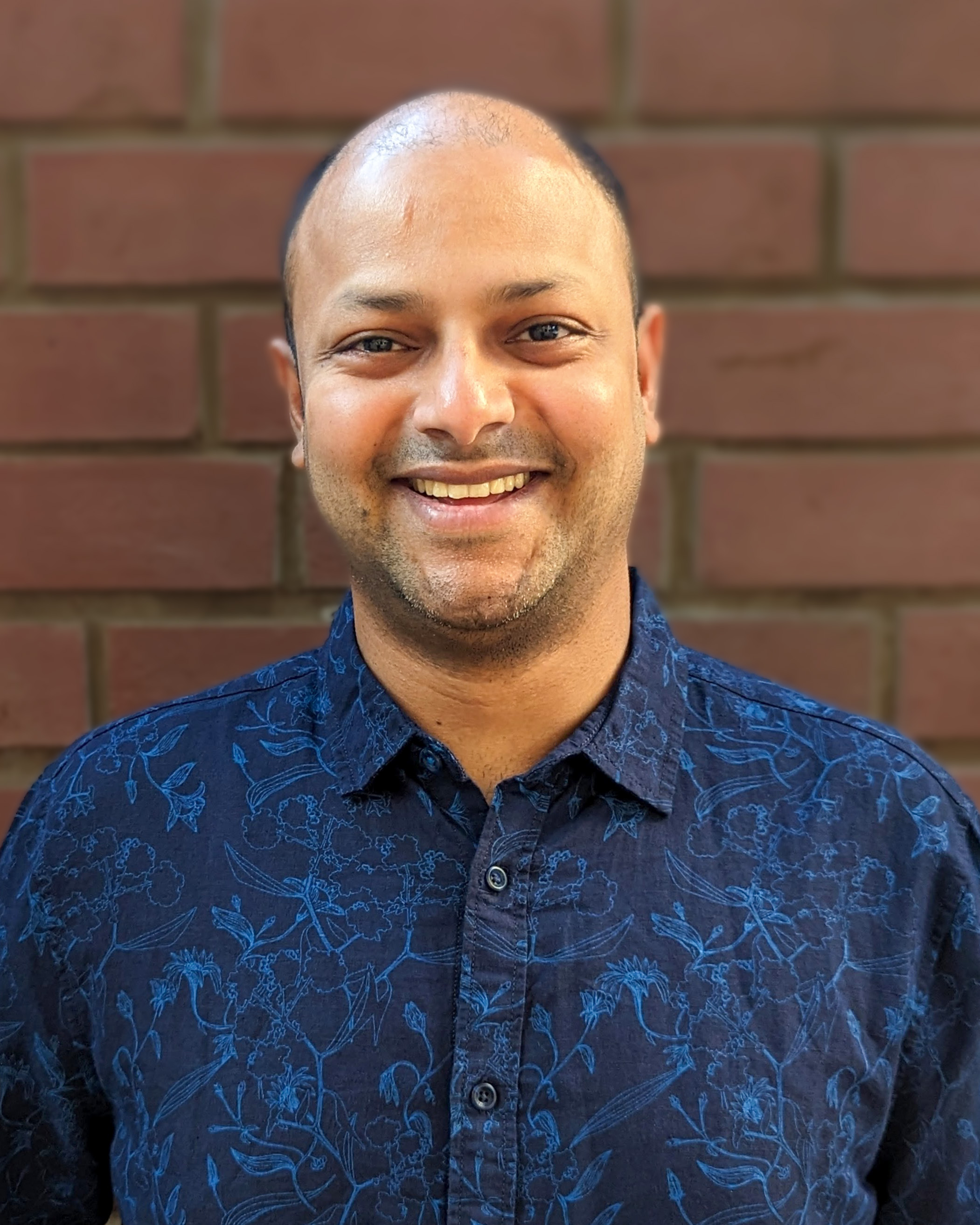
Arun K. Pati

Quantum Speed Limit and Quantum Computing

Arun K. Pati

Keynote 3 · 3:30 – 4:30 PM

Abstract

The quantum speed limit sets the fundamental bound on how fast a quantum system can evolve between the initial and the final states. This limit, arising from the time-energy uncertainty relation, plays a crucial role in quantum computing by determining the ultimate rate of information processing, realizing time-optimal control and enhancing the performance of quantum computers. In this talk, I will give a brief introduction to QSL and illustrate how to obtain the quadratic speed up in Grover's algorithm using the quantum speed limit.

Biography

Prof. Arun K. Pati has made many pioneering contributions in the area of Quantum Computation and Quantum Information. He has been working in the area of Quantum Science, Quantum computing and Quantum information over the last 35 years. His seminal contributions include the No-Deletion theorem, No-Hiding theorem, No-Masking theorem, Remote State Preparation, and Stronger Uncertainty Relations. His research papers have been featured in Nature, Science, Scientific American and Nature Asia.

For his original and creative contributions he has received many awards, including the Indian Physical Society Award for Young Scientists, Kolkata (1996), Indian Physics Association Award for Young Physicist of the Year, Mumbai (2000), Samanta Chandra Sekhar Award for the year 2009 from the Orissa Science Academy, India and the Distinguished Alumni award from Berhampur University Odisha. He is an elected Fellow of the Indian Academy of Science, Bangalore and also Fellow of the National Academy of Science, Allahabad. He was a J C Bose National Fellow in 2019. He also figures in the list of World's Famous Quantum Information scientists.

Topics of Interest

  • Enhancing database system components (e.g., query optimizer, query scheduler, transaction scheduler, authentication and integrity manager) with quantum computing and quantum-inspired accelerators
  • Data processing systems that integrate quantum-based and quantum-inspired accelerators, including hybrid quantum-classical approaches
  • Quantum machine learning for autonomous database management, database tuning, workload management, and learned indexes
  • Approaches for data exploration, discovery, and integration based on quantum computing and quantum-inspired hardware accelerators
  • Formal analysis and experimental evaluations assessing the potential of quantum computing for specific use cases in data processing and data management
  • Vision papers describing novel database system designs and novel use cases in data processing and management enabled by quantum computing
  • Quantum computing libraries and programming interfaces for database systems
  • Domain-specific approaches exploiting quantum computers and quantum-inspired accelerators for data analysis (e.g., in finance or health care)
  • Design of benchmarks, metrics, and evaluation frameworks for hybrid quantum–classical data processing systems and quantum-inspired accelerators
  • Leveraging ideas, techniques, and systems from the database community to support advances in quantum computing, e.g., via efficient quantum simulation, data management for quantum experiments, or data encoding and error correction methods for quantum computing

Important Dates

All deadlines are 11:59 PM Pacific Time:

  • Submissions: March 30, 2026 March 20, 2026
  • Notifications: April 10, 2026 April 4, 2026
  • Camera-Ready: May 7, 2026 May 1, 2026
  • Workshop Date: May 31, 2026

Submission Instructions

Submissions must be formatted according to the ACM Primary Article Template (for Latex users, use the "sigconf" template) and submitted using EasyChair here. Authors are responsible for entering all conflicts of interest according to the Conflict of Interest Policy for ACM Publications before the submission deadline. We will impose a triple-blind submission and review policy. In addition to the traditional double-blind submission that hides the authors’ and referees’ names from each other, the triple-blind reviewing goes further and hides the referee names among referees during paper discussions before their acceptance decisions.

We accept three kinds of papers:

  • Full papers with a length of up to 12 pages (excluding references)
  • Short papers with a length of up to 6 pages (excluding references)
  • Abstracts with a length of one single page (including references)

For long and short papers, we consider the following categories:

  • Algorithms: The primary contribution lies in algorithms that allow solving problems that are relevant to the database community on quantum computers or quantum-inspired accelerators. Long papers are expected to provide significant experimental or formal analysis results evaluating the proposed algorithm.
  • Systems: The primary contribution lies in proposing new architectures or frameworks that use quantum computing or quantum-inspired accelerators to address problems in data processing and management. Long papers are expected to evaluate the implementation of the proposed system thoroughly.
  • Experiments: The primary contribution lies in experimental analysis, quantifying properties of existing or novel algorithms that are at least partially executed on quantum computers or quantum-inspired accelerators (or use corresponding simulators). Long papers are expected to provide a more detailed experimental analysis.

For abstracts, each abstract submission is expected to have a single author and should describe ideas and projects at very early stages.

Accepted papers and abstracts will be included in the proceedings and receive presentation slots at the workshop (5 minutes for abstracts, 15 minutes for short papers, and 25 minutes for long papers).

Organization

Workshop Chairs

Steering Committee

Program Committee

Prior Instances